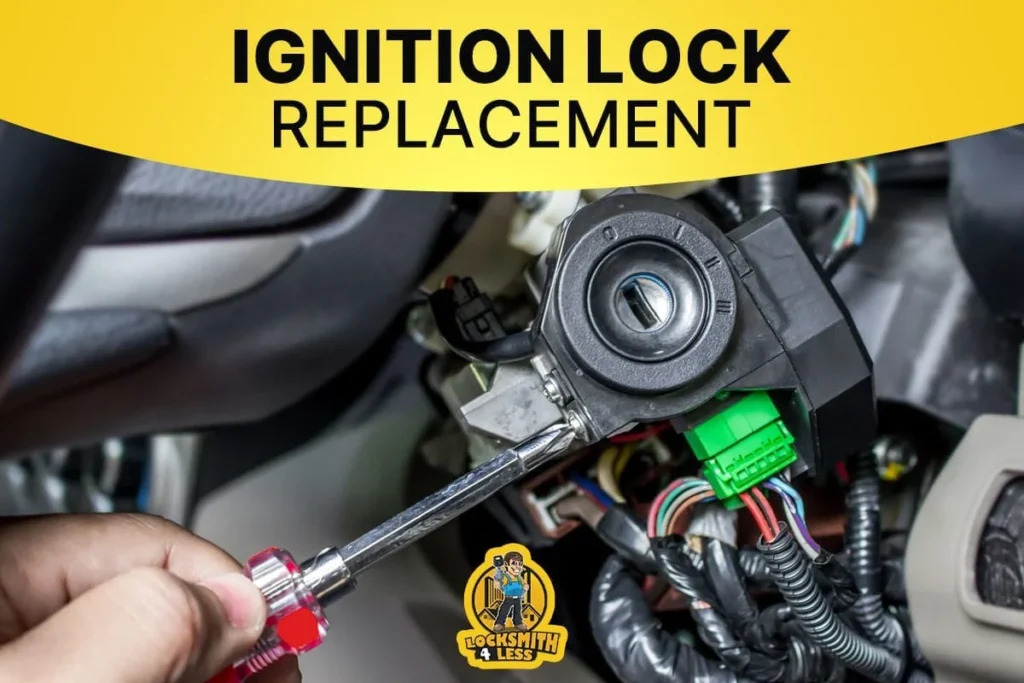
Ignition Lock Replacement in Memphis, TN

When Replacement Is Necessary
When Does an Ignition Lock Need to Be Replaced?
The cylinder will not hold any key properly.
If the internal wafers or pins are so worn that the key slides in and out with no resistance, or if the cylinder no longer distinguishes between the correct key and a wrong one, it has failed and needs to be swapped out.
Repeated key jamming that repair has not fixed.
If you have had the ignition repaired before and the key keeps getting stuck or refusing to turn, the cylinder itself may be warped or corroded beyond what a repair can address.
Broken key fragment stuck deep inside.
Our technicians can extract most broken key pieces. But in rare cases where a fragment is lodged deep in the cylinder and has damaged the internal components, replacing the cylinder is cleaner and more reliable than trying to rebuild it.
You bought a used vehicle and want full security.
If you purchased a car secondhand and are not sure how many keys are floating around from previous owners, replacing the ignition lock gives you a fresh start. Combined with a door lock repair or rekeying, this ensures that only your keys will work with the vehicle.
An attempted theft damaged the ignition.
Forced entry or hot-wiring attempts can physically damage the ignition cylinder and the surrounding housing. After a break-in, replacement is usually the safest option. The National Insurance Crime Bureau (NICB) recommends addressing ignition damage promptly after a theft attempt to prevent the vehicle from being targeted again.
How the Replacement Process Works
How We Replace Your Ignition Lock
Step 1
We diagnose the problem first. Before we recommend a replacement, our technician inspects the ignition to confirm that a repair or rekeying will not solve the issue. We never replace parts that do not need replacing.
Step 2
We remove the old cylinder. The steering column trim is carefully opened and the failed ignition lock cylinder is removed. Our technicians are experienced with this process across a wide range of vehicle makes and models.
Step 3
We install the new cylinder. A quality replacement cylinder is fitted into the steering column. We use parts that meet or exceed the original manufacturer's specifications for your vehicle.
Step 4
We cut and program a new key. A new key is cut to match the fresh cylinder, and then programmed to communicate with your vehicle's immobilizer system. If your car uses a transponder chip key, a smart key, or a key fob, we handle the electronic pairing on-site.
Step 5
We test everything. The key is tested in the new cylinder, the engine is started, and we verify that the ignition, steering lock, and electrical systems are all functioning correctly before we leave.
Repair vs. Rekeying vs. Replacement
How to Know Which Service You Need
Ignition lock repair fixes a cylinder that is still functional but has a specific issue, like a stuck key, a stiff turn, or a minor internal problem. The existing cylinder stays in the vehicle.
Ignition lock rekeying reconfigures the internal pins of the existing cylinder so it works with a new key. This is useful when the cylinder is still in good shape but you want to change which key operates it.
Ignition lock replacement removes the entire cylinder and installs a new one. This is the right choice when the cylinder itself is too damaged, worn, or compromised to repair or rekey.

FAQ
Ignition Lock Replacement Questions
How long does an ignition lock replacement take?
Will I get new keys when the ignition is replaced?
Yes. A new ignition cylinder requires a new key. We cut and program the key on-site as part of the replacement service. If you want a spare duplicate made at the same time, we can do that too.
Will the new ignition key also work with my door locks?
Do you replace ignitions for all car brands?
Can you come to me, or do I need to bring the car in?